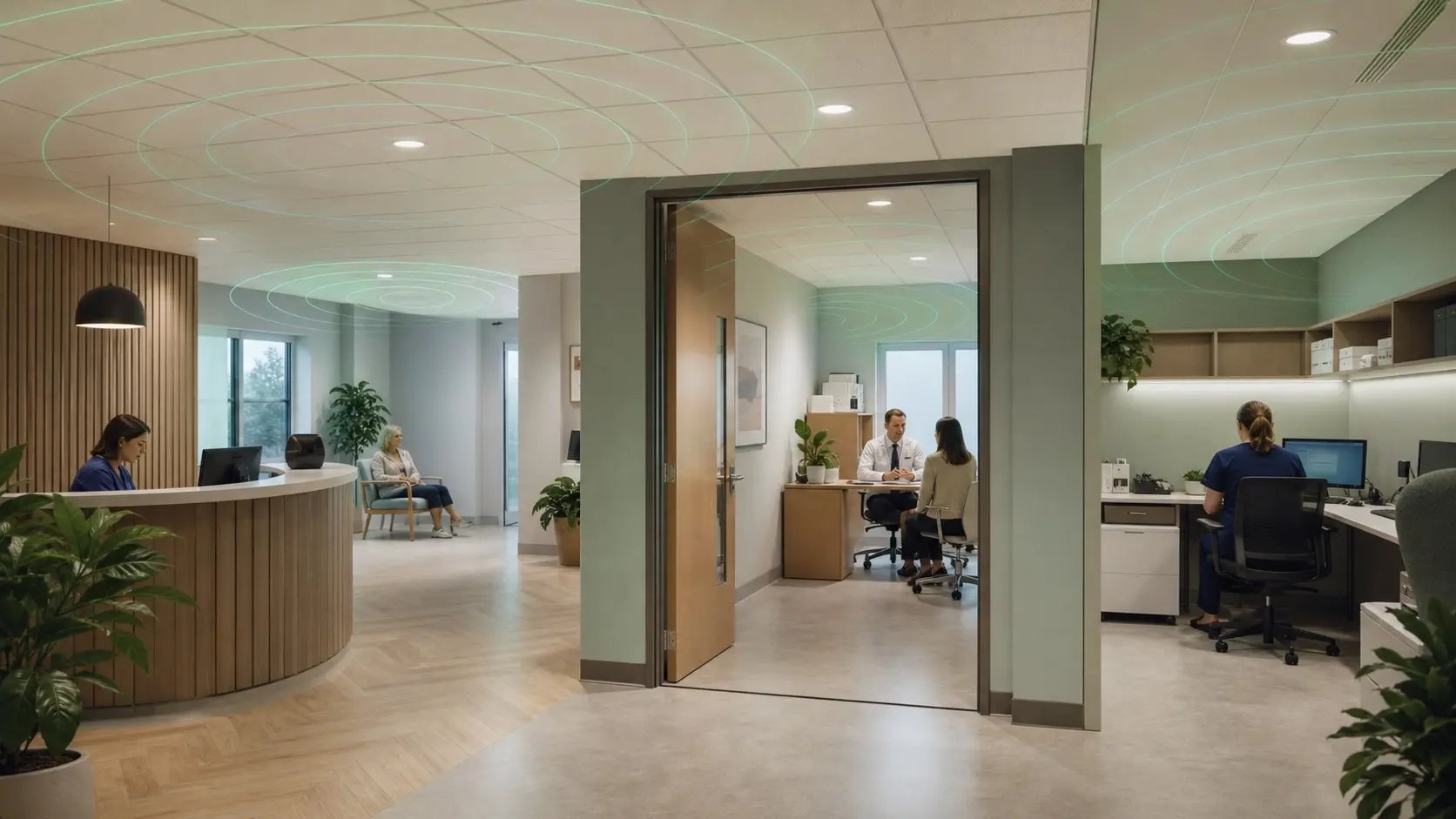
Patient confidentiality
Clinical and personal conversations should not be easily overheard by other patients or visitors.
Sector acoustic privacy
Healthcare settings need privacy and clear communication at the same time. AET helps reduce overheard conversations in reception, consultation and staff areas while supporting a calmer environment for patients and teams.
20+ years experience • UK-manufactured systems • Projects from single rooms to major rollouts
Why it matters
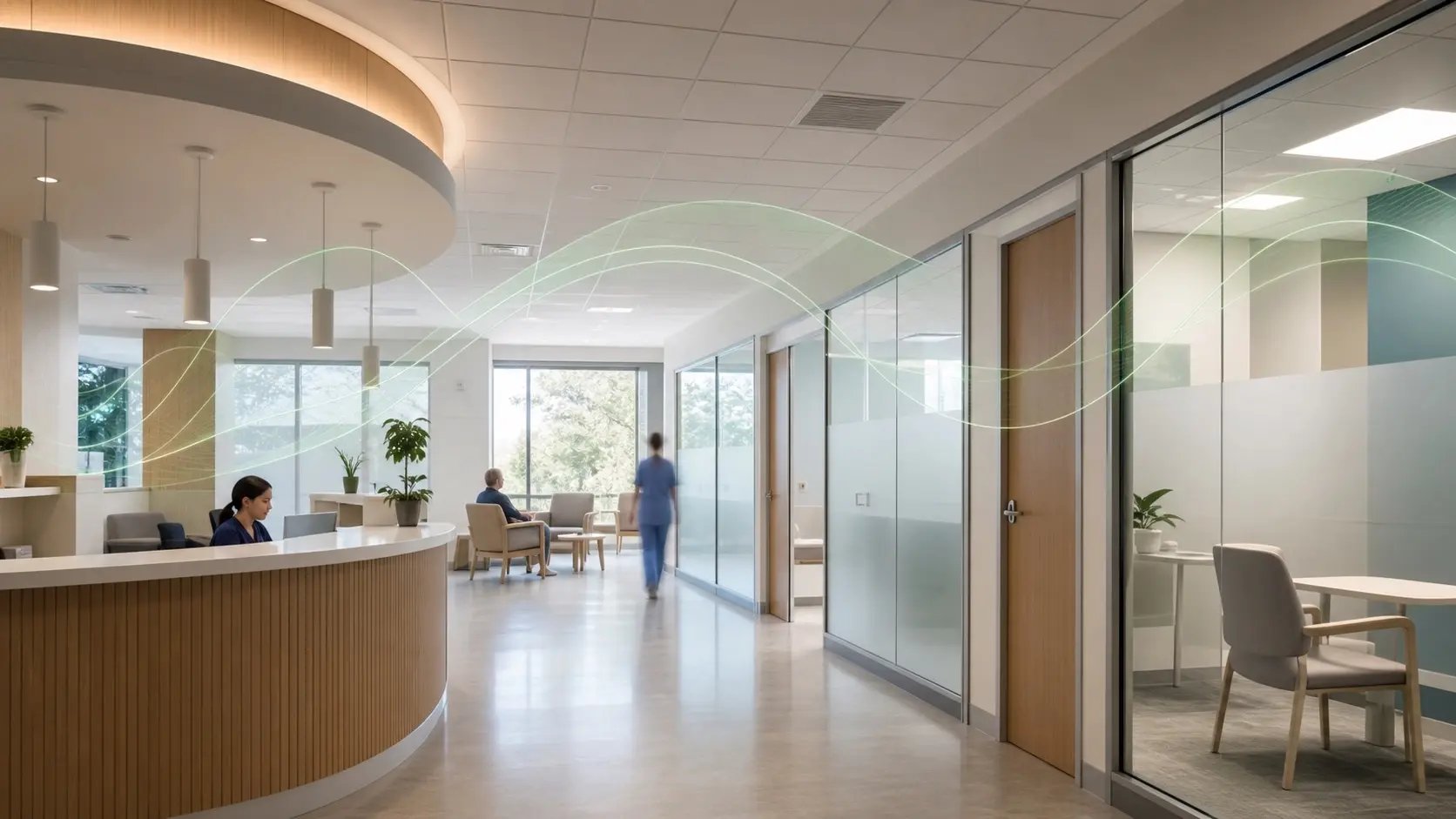
Healthcare acoustics need careful balance: sensitive conversations, patient comfort and staff communication all matter.
Clinical and personal conversations should not be easily overheard by other patients or visitors.
Front desks often handle sensitive information in spaces that are open and busy.
Administrative and clinical support teams need concentration despite high levels of interruption.
A more controlled soundscape can help make waiting spaces feel less exposed and stressful.
How AET helps
AET assesses how speech travels through reception areas, consulting rooms, corridors and staff spaces before recommending the right approach.
Sound masking and acoustic treatments are designed to support privacy and comfort while preserving the communication that healthcare teams rely on.
Built for real workplaces
AET designs, installs, calibrates and supports acoustic privacy systems for spaces where concentration and confidentiality matter.
Common use cases
Start with the spaces where patients, visitors and staff are most likely to overhear sensitive conversations.
Reduce how clearly conversations at desks and nearby rooms travel into public areas.
Support private conversations between patients and healthcare professionals.
Improve focus for teams handling calls, records and sensitive internal conversations.
Answers for healthcare teams considering sound masking or wider acoustic improvements.
Yes. It can reduce the intelligibility of speech beyond the immediate conversation area, supporting privacy in reception and adjacent spaces.
Reception areas are often a strong fit because sensitive conversations happen close to waiting visitors and open circulation routes.
AET designs and calibrates systems carefully so privacy improves without compromising necessary communication between staff and patients.
Yes. AET can review the different needs of public, clinical and staff areas and recommend a practical acoustic approach.
Talk to a specialist
Tell AET about the patient-facing, clinical or staff areas where privacy, comfort or distraction needs improving.