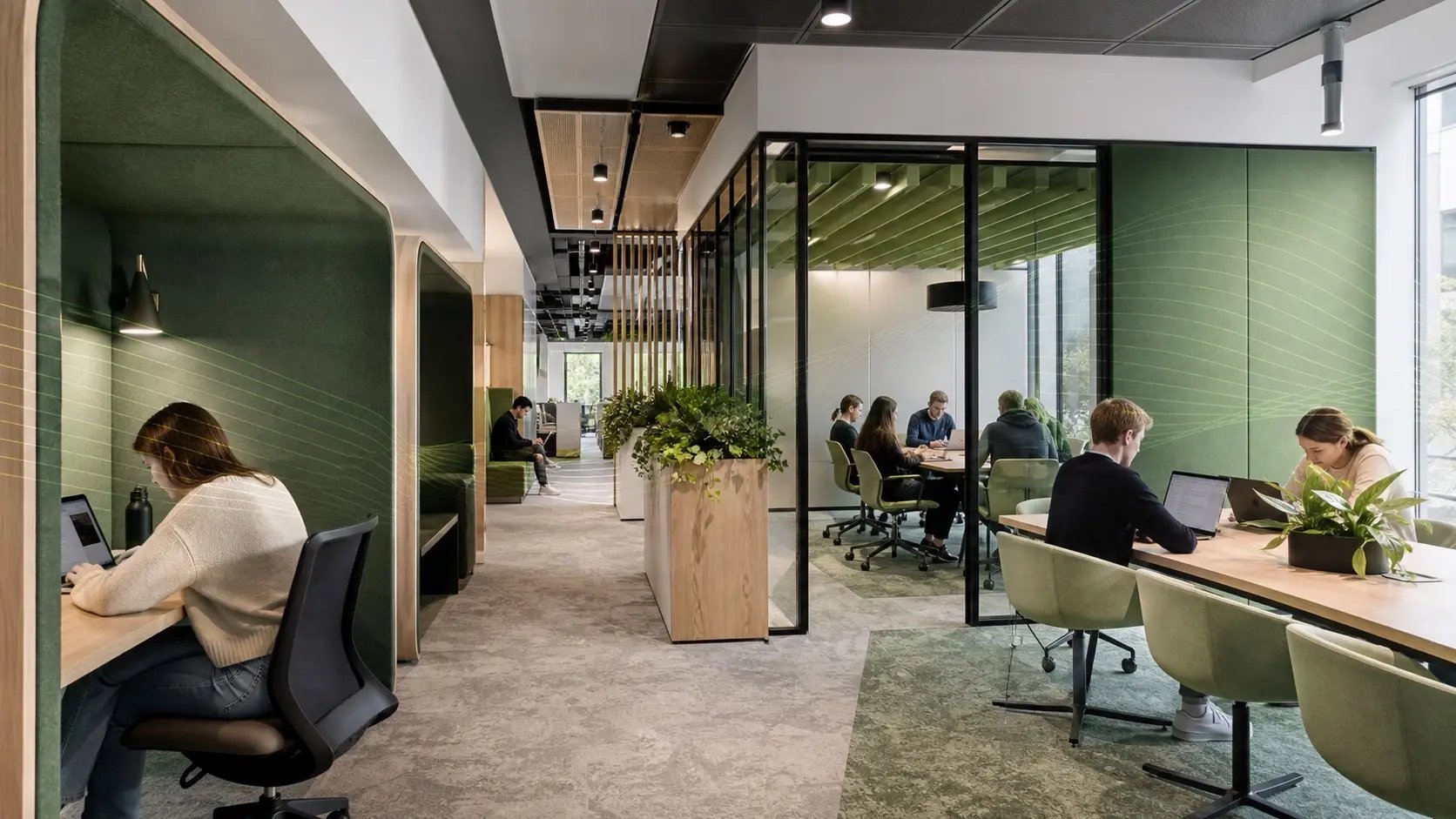
Study concentration
Speech distraction can make quiet work harder in libraries, study zones and shared learning spaces.
Sector acoustic privacy
Learning spaces need concentration without removing collaboration. AET helps universities, business schools and education environments manage speech distraction, privacy and acoustic comfort in shared spaces.
20+ years experience • UK-manufactured systems • Projects from single rooms to major rollouts
Why it matters
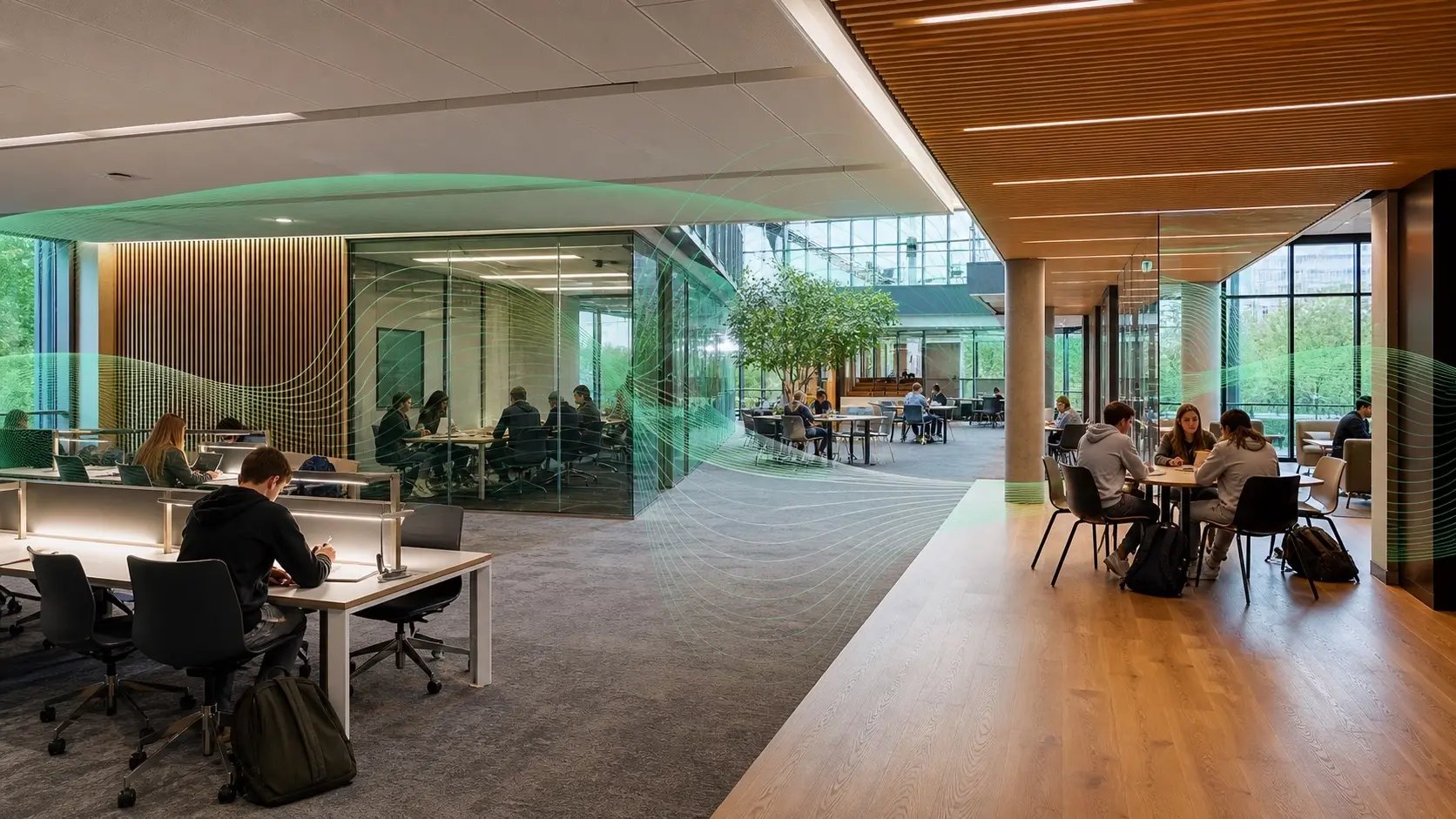
Education environments need to support different behaviours in close proximity: study, collaboration, teaching and support.
Speech distraction can make quiet work harder in libraries, study zones and shared learning spaces.
Group work should not overwhelm neighbouring areas or make flexible spaces uncomfortable.
Support services and staff offices often handle sensitive conversations in busy buildings.
Changing room use can create acoustic conditions that need careful control.
How AET helps
AET reviews how people use the space, where speech travels and where concentration or privacy breaks down before recommending sound masking or acoustic treatment.
The system is then installed and tuned around the needs of study areas, staff spaces and collaborative zones.
Built for real workplaces
AET designs, installs, calibrates and supports acoustic privacy systems for spaces where concentration and confidentiality matter.
Common use cases
Focus on the spaces where concentration, privacy and collaboration need to work side by side.
Reduce disruptive speech intelligibility in spaces designed for focus and independent work.
Support active group working without allowing noise to dominate surrounding spaces.
Protect sensitive conversations between staff, students and support teams.
Answers for estates, facilities and learning-space teams planning acoustic improvements.
Yes. By reducing the clarity of surrounding speech, sound masking can help make study areas feel more consistent and less distracting.
No. It can be useful in education settings where speech privacy, concentration or mixed-use acoustic comfort are important.
It can, provided the design is carefully assessed and commissioned around the expectations of quiet study environments.
AET calibrates systems around the space, occupancy and acoustic goals so the result supports comfort without feeling intrusive.
Talk to a specialist
Tell AET about the study, teaching, staff or support areas where speech privacy or acoustic comfort needs improving.